

Drive out toward the edges of the Las Vegas Valley and you will still see model homes, flags and “Now Selling” banners. But behind those banners, something big has changed in 2026: homebuilders are slamming the brakes.
Southern Nevada builders are signing fewer contracts, pulling fewer permits and closing fewer sales than they did a year ago. A new UNLV report says our region cut residential building permits more than any other large metro in the country in the first half of the year. At the same time, the new homes that do sell are closing at record prices.
That sounds like a contradiction. It isn’t. In this post I’ll walk through the latest numbers, explain what is driving the slowdown, and share what it means for you, whether you are shopping for a brand-new home, weighing new versus resale, or trying to sell an existing house while builders compete for the same buyers.
New-Home Sales by the Numbers: August 2026
The most recent monthly snapshot comes from Las Vegas-based Home Builders Research, as reported by the Las Vegas Review-Journal on September 25, 2026. Here is what builders did in August:
| Metric (Southern Nevada) | August 2026 | Change vs. August 2025 |
|---|---|---|
| Net new-home sales (contracts minus cancellations) | 502 | Down 31% |
| New-home permits pulled | 448 | Down 31% |
| New-home closings | 672 | Down 22% |
| Median closing price, newly built homes | $552,990 (all-time high) | Up 3.1% |
Zoom out to the year so far and the picture is the same. Through August, builders closed 5,422 home sales, down 21% from the same eight months of 2025, and pulled 25% fewer new-home permits. That follows a soft 2025, when new-home permits and closings each fell about 20% from 2024.
In plain English: fewer people are signing contracts for new homes, so builders are starting fewer of them. The buyers who are still purchasing are paying more than ever, which tells us the pool of buyers has shrunk but those who remain are well qualified.
Las Vegas Leads the Nation in Building Cutbacks
The slowdown isn’t only a local talking point. In an October 21, 2026 story, the Review-Journal covered a report from UNLV’s Lied Center for Real Estate, which compared building permits across the country’s 55 largest metro areas using Census Bureau data.
The headline finding: residential building permits in Southern Nevada fell 35% in the first half of 2026 compared with the first half of 2025. That was the biggest drop of any of those 55 metros.
Other Western markets went the other way. According to the same report:
- San Jose: permits more than doubled
- Seattle: permits nearly doubled
- Portland: up 25%
- Salt Lake City: up 21%
- Denver: up 19%
- Riverside, Calif.: down 13%
- Phoenix: down 4%
Why Las Vegas swings harder than other cities
The Lied Center pointed to the type of housing we build. Nearly 85% of residential permits in the Las Vegas area through June were for single-family homes. Compare that with roughly 56% in Portland, 46% in Salt Lake City and 29% in Seattle, where apartment projects make up a much bigger share.
Single-family tract building can ramp up and shut down quickly. Builders here have a long track record of doing exactly that. Home Builders Research has reported that builders pulled about 15,000 permits in 2021, when ultra-low rates set off a buying frenzy, then about 10,970 in 2022, a 27% drop, once rates jumped.
Lied Center director Shawn McCoy also noted that Southern Nevada’s population growth has slowed. Builders don’t want to put up homes for buyers they aren’t sure will arrive. As McCoy put it to the Review-Journal, in Las Vegas “we’re digging even deeper” than other metros.

What’s Behind the Pullback: Rates and Affordability
The single biggest factor is the cost of borrowing. Federal data cited by the Review-Journal put the average 30-year mortgage rate at 7.03% in late September 2026, up from 5.98% in late February. Rates have hovered above 7% since September, according to the paper’s October 20 reporting.
A jump of about one percentage point in a matter of months changes the math for a lot of households. On a typical new-home loan, it can mean a few hundred dollars more each month, which is enough to knock some buyers out of qualifying for the home they wanted.
The builders see it on the ground. In a September earnings call, Lennar CEO Stuart Miller said that in many of the company’s markets, close to half of the people visiting its communities can’t immediately qualify for a mortgage. He added that Lennar is adjusting prices and incentives to help buyers get there.
Home Builders Research president Andrew Smith made a similar point in his latest report, noting that builders nationwide continue to lean on sales incentives and price cuts. The National Association of Home Builders described a small national improvement in August new-home sales as masking ongoing weakness, with elevated rates and affordability still holding demand back.
New Homes vs. Resale: How the Two Markets Compare
If you are deciding between a new build and an existing home, it helps to look at both markets side by side. Here are the latest figures I could confirm:
| Newly built homes | Existing single-family homes | |
|---|---|---|
| Latest median price | $552,990 (August 2026, record) | $470,000 (September 2026) |
| Price trend | Up 3.1% year over year | Flat year over year; off the $490,000 peak set in May and June |
| Sales trend | Net sales down 31% year over year (August) | Single-family sales down 7.4% year over year (September) |
| Source | Home Builders Research via Review-Journal | Las Vegas REALTORS® via Fox5 and News3LV |
Keep in mind these are medians from different months and different mixes of homes, so they aren’t a perfect apples-to-apples comparison. New homes also tend to sit farther out on the edges of the valley, and they often come without finished landscaping or window coverings. Still, the gap of roughly $80,000 is real and worth thinking about.
On the resale side, Las Vegas REALTORS® reported about five months of supply in September 2026, up from about four a year earlier, with 7,995 single-family homes listed without offers at the end of the month. That’s more choice than resale buyers have had in years.
The incentive war
Here’s where it gets interesting. Builders have a tool many resale sellers don’t: in-house or partner lenders that can offer special financing. In an October 20, 2026 Review-Journal story, longtime local agent Steve Hawks said builder incentives in some areas can make the monthly cost of a new home lower than renting a comparable place. He also said some builders have cut prices enough to put certain new homes below comparable resale listings.
Resale sellers are responding. Hawks estimated that 80% to 90% of his financed deals now include a request for the seller to buy down the buyer’s interest rate, and that such requests are the norm in the $300,000 to $700,000 range. Other local agents and lenders quoted in the same story said a seller credit toward a rate buydown or closing costs often does more for a buyer’s monthly payment than a similar-sized price cut.
Where New Construction Is Still Happening
A slowdown doesn’t mean a standstill. Several large projects are moving forward, and they will shape the market for years:
- The Preserve (former Badlands golf course): Lennar has started site work on the roughly 250-acre property near Alta Drive and Hualapai Way. Plans call for 1,480 homes, a mix of townhomes, condos and detached houses, plus a pool, fitness center, playground, and basketball and pickleball courts.
- The Foundry (downtown Las Vegas): Lennar held a ceremonial groundbreaking on about 70 acres spanning the former Grant Sawyer state office building site and the Cashman Center complex. Plans call for more than 1,000 homes, with vertical construction expected to start in October 2027.
- Former Eastside Cannery site: Lennar won approval this summer for a 279-lot subdivision on the empty hotel-casino property.
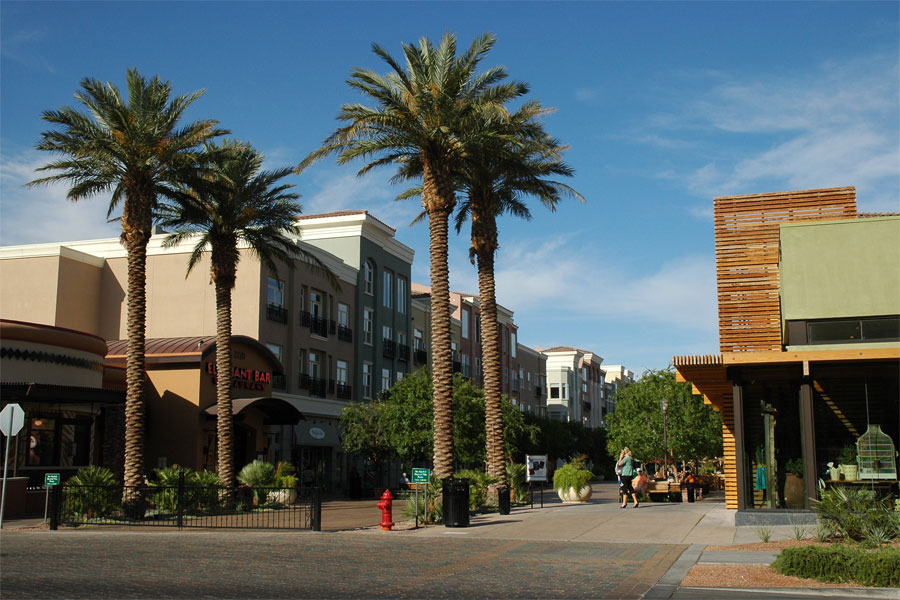
Notice the trend. Much of the new activity is infill: older golf courses, government sites and closed casinos inside the existing city. That’s different from the edge-of-the-valley tract building that defined earlier booms, and it could bring new housing closer to jobs and amenities.
What Fewer Permits Today Could Mean Tomorrow
Because it can take several months between a signed contract and a finished house, today’s permit numbers are a preview of next year’s new-home supply. With permits down 25% through August and 35% in the first half by the Lied Center’s count, there will simply be fewer brand-new homes coming online in 2027 than there would have been otherwise.
What happens next depends heavily on mortgage rates and population growth, and nobody can predict either with confidence. Here are a few reasonable possibilities to keep in mind:
- If rates stay high, builders likely keep incentives generous and keep starts low, and resale sellers continue competing with them on concessions.
- If rates ease, demand could come back faster than builders can restart construction. With fewer homes in the pipeline, that could put upward pressure on prices again.
- Either way, the infill projects above are long-term bets that builders believe Las Vegas will keep growing.
Las Vegas has a long history of sharp swings in both directions, and the Lied Center report is a reminder of that. The best approach is to make decisions based on your own timeline and budget rather than trying to time the bottom or the top.
What This Means for Buyers
Honestly, this is one of the better moments in recent years to have a strong position as a buyer, especially if you can qualify comfortably at today’s rates.
- Shop builder incentives hard. Builders with slowing sales have reasons to deal. Ask every community about rate buydowns, closing-cost help, upgrade credits and quick-move-in inventory. Get the offer in writing.
- Compare the total monthly cost, not just the price. A new home with a builder rate buydown can beat a cheaper resale home on monthly payment, or it can lose once you add HOA dues, special assessments, landscaping and window coverings. Run the numbers both ways.
- Ask resale sellers for concessions too. With about five months of resale supply, many sellers are open to credits toward a buydown or closing costs.
- Understand the buydown you’re getting. Some buydowns are temporary and step up after a year or two; others are permanent for the life of the loan. Know which one you’re signing.
- Use your own lender for a comparison quote. Builder financing can be a great deal, but a second quote keeps everyone honest.
- Bring your own agent to the model home. Register your agent on your first visit (many builders require it), and you’ll have someone negotiating for you rather than for the builder.
What This Means for Sellers
If you’re selling an existing home, your competition isn’t only the house down the street. It’s also the builder down the road with a sales office, a lender partner and a marketing budget.
- Price with new construction in mind. Look at what nearby builders are offering, including incentives, not just at resale comparables.
- Lead with your advantages. Mature trees, finished yards, established neighborhoods, shorter commutes and no construction dust are real selling points. Make sure your listing spells them out.
- Think “payment,” not just “price.” A seller credit toward a rate buydown may help a buyer more than an equal price cut, while protecting your sale price. Talk through both options before you reduce.
- Be ready to move fast on a good offer. With fewer qualified buyers shopping, a solid, financed offer deserves serious attention.
- Prepare the home well. Buyers comparing your house to a spotless model home will notice deferred maintenance. Small repairs and good photos go a long way.
The Bottom Line
Las Vegas builders are pulling back harder than builders anywhere else in the country, with net sales and permits each down 31% in August and first-half permits down 35%. Higher mortgage rates are the main reason. Yet new-home prices are at a record, resale prices are holding near last year’s levels, and big infill projects show builders still believe in this valley over the long run.
For buyers, that adds up to leverage and incentives. For sellers, it means pricing smart and using concessions wisely. Every neighborhood and every builder is a little different, so if you’d like help comparing a new build with resale options, or figuring out the right pricing and concession strategy for your home, reach out to Darrel Homes. We’re happy to walk through the numbers with you, no pressure.
This article is general market commentary for informational purposes and is not financial, legal or tax advice. Figures are from the sources below as of the dates noted.
Sources
- Las Vegas Review-Journal, “‘Continued weakness’: Southern Nevada buyers keep pulling back from newly built homes,” September 25, 2026 (Home Builders Research August 2026 data; mortgage rates; Lennar comments): reviewjournal.com
- Las Vegas Review-Journal, “Las Vegas sees nation’s biggest drop in homebuilding permits,” October 21, 2026 (UNLV Lied Center for Real Estate report): reviewjournal.com
- Las Vegas Review-Journal, “Las Vegas home sellers turn to mortgage buydowns to attract buyers,” October 20, 2026: reviewjournal.com
- Las Vegas Review-Journal, “Construction starts on new housing project at former Badlands golf course,” October 20, 2026: reviewjournal.com
- Fox5 Las Vegas, “Las Vegas realtors report fewer homes selling as interest rates rise,” October 6, 2026 (Las Vegas REALTORS® September 2026 data): fox5vegas.com
- News3LV (KSNV), “Fewer homes sell around Las Vegas in September amid rising interest rates,” October 2026: news3lv.com
- Photos: Wikimedia Commons (credits in captions)